


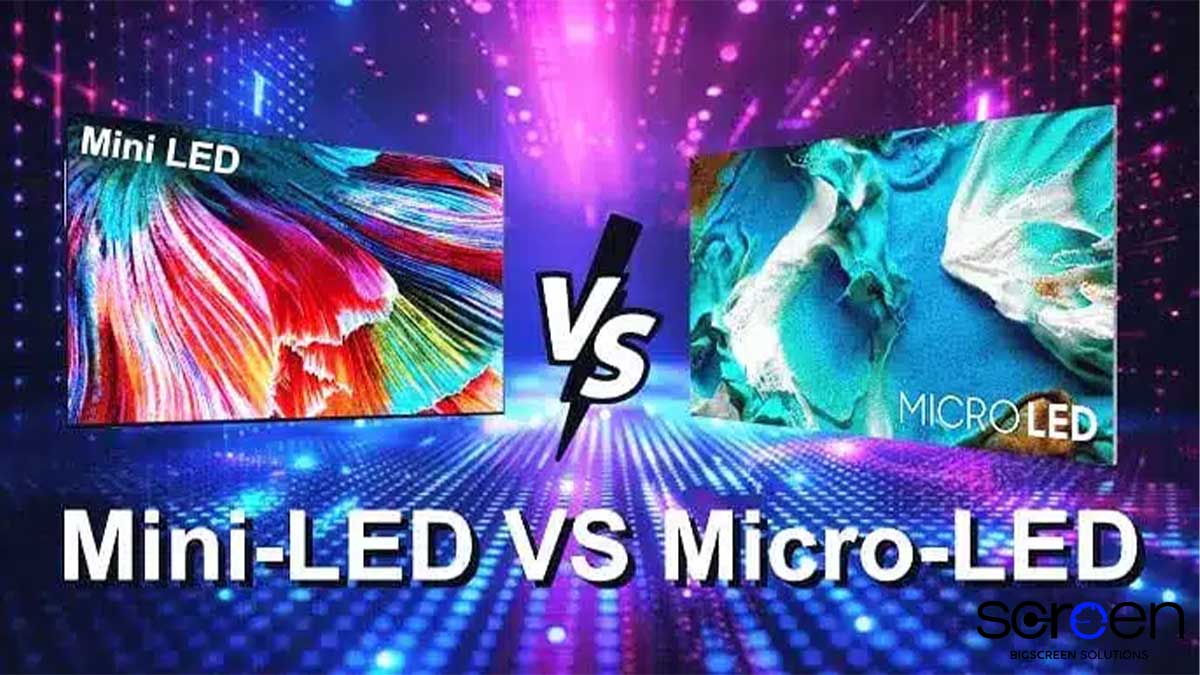
In recent years, display innovation has accelerated at an unprecedented pace. From smartphones and televisions to commercial advertising screens and architectural installations, visual quality has become a defining factor in how brands communicate and how users consume content. Among the most discussed advancements today is Micro-LED vs Mini-LED, a comparison that often confuses even tech-savvy buyers.
Both technologies aim to solve long-standing issues in traditional LED and LCD systems, such as limited contrast, blooming, energy inefficiency, and short lifespan. However, they achieve these goals in fundamentally different ways. Understanding these differences is no longer optional for businesses, system integrators, or anyone investing in large-scale visual solutions.
This article explores the technologies in depth, explains how they work, compares their strengths and weaknesses, and helps you determine which option is more suitable depending on performance needs, environment, and budget.

The Evolution of LED Displays and the Rise of New Architectures
Classic LED and LCD displays rely on backlighting systems that illuminate pixels indirectly. While effective, these systems struggle with precise light control, especially in dark scenes. To overcome these limitations, manufacturers began shrinking LED components and increasing their density.
Mini-LED technology was the first major step forward, introducing thousands of smaller LEDs into the backlight layer. Soon after, Micro-LED emerged as a more radical concept, eliminating backlights entirely and redefining how pixels generate light.
This shift is part of a broader movement toward next-generation display technology, where accuracy, efficiency, and modular scalability are equally important.
What Is Mini-LED and How Does It Work?
Mini-LED is an advanced form of LED-backlit display that uses extremely small LEDs, typically between 100 to 200 micrometers in size. These LEDs sit behind an LCD panel and are grouped into local dimming zones.
Each zone can be controlled independently, allowing brighter highlights and deeper blacks compared to conventional LED displays. This architecture significantly improves contrast and reduces halo effects, especially when compared to older full-array or edge-lit designs.
Mini-LED is widely used in high-end televisions, professional monitors, and commercial screens where improved brightness and affordability must coexist. It also integrates well into existing manufacturing pipelines, which keeps costs relatively manageable.
What Is Micro-LED and Why Is It Revolutionary?
Unlike Mini-LED, Micro-LED does not rely on an LCD layer or backlight system. Instead, each pixel is a self-emissive LED capable of producing its own light and color independently. This fundamental change results in unmatched brightness control, perfect black levels, and extremely fast response times.
The concept behind What is MicroLED is simple but powerful: remove all unnecessary layers and allow each pixel to operate autonomously. This leads to superior durability, longer lifespan, and dramatically improved energy efficiency.
Micro-LED displays are modular by nature, making them ideal for large-format installations, premium video walls, and environments where visual precision is mission-critical.
Core Technical Differences Explained Clearly Micro-LED vs Mini-LED
When comparing Micro-LED vs Mini-LED, the most important distinction lies in how light is generated and controlled.
Mini-LED enhances traditional LCD systems by refining the backlight. Micro-LED replaces the entire structure with millions of microscopic LEDs acting as individual pixels. This difference affects everything from image quality and viewing angles to installation complexity and maintenance.
Mini-LED displays may still experience some blooming due to zone-based dimming, whereas Micro-LED delivers pixel-level precision with no light bleed. Response time is another major factor, with Micro-LED offering near-instantaneous pixel switching.

Brightness, Contrast, and Visual Performance Micro-LED vs Mini-LED
Both technologies are capable of extreme brightness, making them suitable for high-ambient-light environments. However, Micro-LED excels in maintaining contrast even at peak brightness levels.
Mini-LED displays can reach impressive luminance values, which is why they are often chosen for Outdoor Digital Signage and high-visibility retail spaces. Still, their contrast performance depends heavily on the number and quality of dimming zones.
Micro-LED, by contrast, maintains consistent image integrity regardless of brightness, making it ideal for premium LED Video Wall Panels used in broadcast studios, command centers, and flagship brand installations.

Durability, Lifespan, and Energy Efficiency Micro-LED vs Mini-LED
Energy efficiency is a growing concern for large-scale installations. Mini-LED improves power consumption compared to older LED systems, but Micro-LED goes further by eliminating unnecessary light leakage and conversion losses.
Micro-LED displays also have a longer operational lifespan due to lower heat generation and simpler pixel structures. This makes them particularly suitable for continuous-use environments such as transportation hubs and control rooms.
These advantages align closely with sustainability goals often considered when planning 7 suitable places to install urban displays in modern cities.
Cost, Scalability, and Real-World Accessibility Micro-LED vs Mini-LED
One of the biggest barriers to Micro-LED adoption remains cost. Manufacturing microscopic LEDs with perfect uniformity is complex and expensive. As a result, Micro-LED is currently positioned as a premium solution.
Mini-LED offers a more accessible entry point while still delivering significant performance improvements. For businesses making their first investment, understanding 5 Mistakes to Avoid When Investing in LED Signage Displays for the First Time can prevent costly errors.
As production processes mature, Micro-LED pricing is expected to decline, making it more accessible across a wider range of applications.
Indoor and Outdoor Applications Compared
Choosing between these technologies often depends on environment. Mini-LED works exceptionally well in controlled indoor settings and is increasingly optimized for Indoor vs Outdoor LED Displays that require high brightness without extreme modularity.
Micro-LED, however, shines in both indoor and outdoor environments due to its superior brightness, durability, and modular design. Its ability to scale seamlessly makes it suitable for architectural façades and large public installations.
Future Outlook and Industry Adoption
The future of display innovation clearly points toward Micro-LED as the long-term solution. However, Mini-LED will remain highly relevant for years, especially in mid-range commercial and professional markets.
As next-generation display technology evolves, hybrid approaches and improved manufacturing techniques may further blur the lines between these two solutions.
In the ongoing debate of Micro-LED vs Mini-LED, the right choice depends less on hype and more on practical requirements, environment, and long-term goals.
Final Thoughts
There is no universal winner in the comparison of Micro-LED vs Mini-LED. Mini-LED offers an excellent balance of performance and cost, making it ideal for many current applications. Micro-LED delivers unmatched quality and longevity, positioning it as the future standard for premium visual experiences.
For businesses planning scalable, high-impact display solutions, understanding this difference is essential. Whether you are upgrading an existing system or planning a new installation, informed decisions lead to better results and higher returns.
If you are looking for expert guidance, tailored solutions, and professional-grade display systems, the team at bigledscreen can help you choose the right technology and implement it with confidence.