


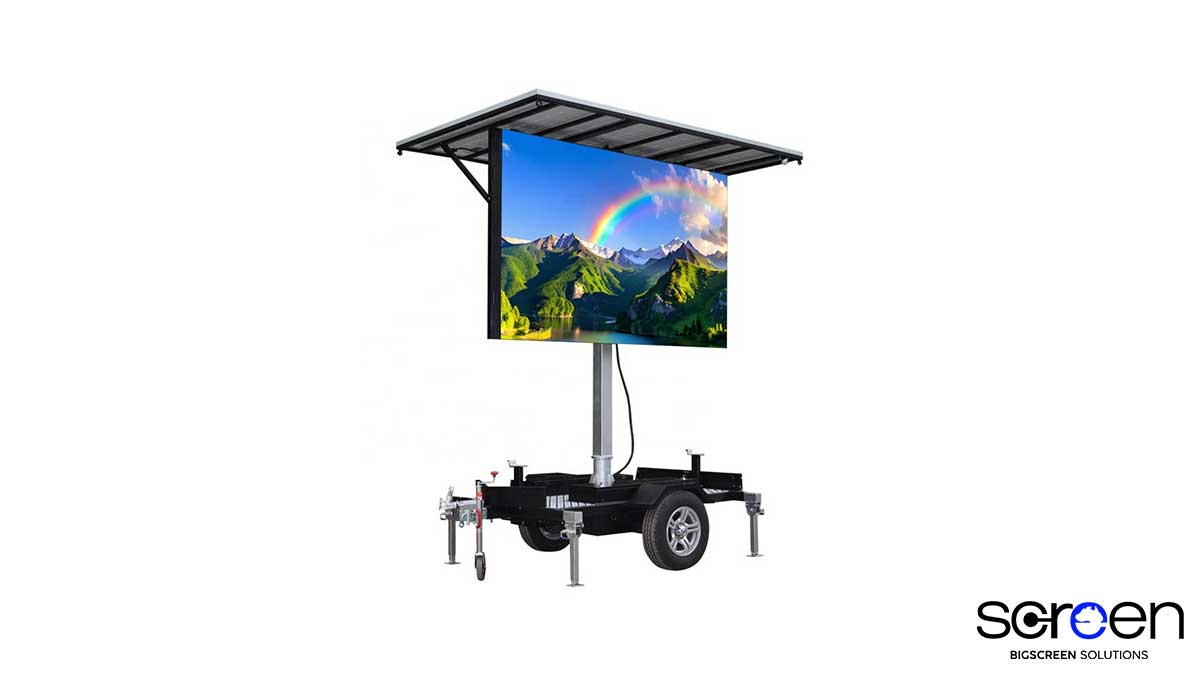
Cities and businesses are seeking energy-efficient ways to deliver information, advertise, and support public services—especially in remote or power-limited areas. As environmental concerns grow and electricity costs continue to rise, many organizations are turning toward solar powered LED signage as a practical and sustainable alternative to traditional electrical systems.
The combination of LED display technology with solar energy has transformed how outdoor communication is designed and deployed. These systems operate independently from the city grid, rely on renewable energy, and function even during power outages. Their autonomy makes them valuable not only for commercial use but also for safety, public information, and environmental conservation initiatives.

How Solar Energy Powers Modern LED Displays
Solar-powered screens function through a straightforward yet efficient system: solar panels collect sunlight, convert it into electricity, and store excess energy in high-capacity batteries. The LED panels then draw power from these batteries throughout the day and night.
Because LEDs are inherently low-consumption lighting components, the energy collected during a single sunny day is generally enough to power the display for extended periods. This becomes particularly important during cloudy weather or long winter nights, where stored energy ensures uninterrupted operation. The reliability of solar powered LED signage is one of the main reasons it has gained widespread adoption in recent years.
To better understand energy use patterns, some buyers refer to reports such as A Power Consumption Comparison of LED Display Technologies before choosing the right model. Solar integration makes these comparisons even more relevant, since every watt saved increases the screen’s independent operating time.
Advantages of Solar-Powered LED Display Systems
Solar-integrated LED signs offer numerous benefits across urban, commercial, and industrial environments.
1. Complete Energy Independence
The absence of wired electrical infrastructure allows these displays to be installed in remote locations, open fields, highways, rural zones, and temporary work sites. This makes solar powered LED signage ideal for environmental monitoring stations, agricultural areas, and emergency communication points.
2. Lower Installation and Maintenance Costs
Without the need for underground cabling, electrical permits, or power distributors, installation becomes faster and significantly cheaper. Even in busy city centers, avoiding extensive electrical work prevents disruptions to traffic or pedestrian flow.
3. Eco-Friendly Operation
Solar energy reduces carbon emissions and helps cities meet renewable energy targets. LEDs require little electricity, meaning that small solar panels are often sufficient to power even large-format screens.
4. Reliable Performance During Power Outages
In moments where grid-connected signs fail—storms, accidents, or infrastructure issues—solar LED systems continue operating normally. This can be vital for public safety announcements.
5. Adaptability Across Multiple Display Formats
Solar technology can be integrated into many screen designs, including roadside message boards, kiosk monitors, and even large panel systems similar to LED Video Wall Panels, though with tailored power-management systems for outdoor use.
Applications of Solar-Powered LED Displays
The versatility of these systems enables use across dozens of industries. Here are the most influential applications shaping modern infrastructure:
Public Safety and Emergency Response
In disaster-prone areas, cities rely on portable solar LED screens for alerts related to earthquakes, floods, fires, and road closures. Their independence makes them operational even when electrical lines are damaged.
Traffic Management and Roadside Warnings
Highways, construction zones, and remote routes often lack stable electricity. Solar LED message boards provide directions, speed advisories, congestion warnings, and temporary detours.
Advertising and Commercial Messaging
Businesses are increasingly adopting off-grid signage to reduce long-term operational costs. The ability to install a screen anywhere sunlight is available gives advertisers far more freedom.
Event Management and Pop-Up Installations
For conferences, festivals, and sports events, portable off-grid screens eliminate the need for generators or temporary electrical connections. Many event planners pair these setups with stands similar to an LED Poster Display Stand for branding or scheduling updates.

Smart City and Environmental Monitoring
Green infrastructure programs often integrate renewable-powered display stations to show air quality updates, water usage metrics, or public health guidelines.
The flexibility of solar powered LED signage continues to grow, making it one of the most adaptable technologies in the urban communication landscape.
Technical Components Behind Solar LED Systems
To maintain consistent performance, each display includes several key components:
Solar Panels
High-efficiency monocrystalline panels are preferred due to their durability and superior energy output.
Battery Storage
Lithium iron phosphate batteries are commonly used for their longer lifespan and stability. They provide steady current to LED panels throughout nighttime hours.
Charge Controllers
These devices manage the flow of energy between panels and batteries, preventing overcharging or excessive discharge.
LED Display Panels
Depending on placement, pixel pitch and brightness vary. Outdoor models require higher brightness to overcome sunlight reflection, similar to high-luminance Outdoor Digital Signage.

Mounting and Structural Frames
Frames must support both the LED screen and the solar panel array, often with tilt adjustments to maximize sun exposure.
Professional installation becomes essential for large or high-traffic locations. Municipalities and companies often hire teams offering professional LED wall installation to ensure structural reliability, electrical safety, and proper calibration.
Performance Differences Between Solar and Grid-Powered LED Displays
While both systems perform well, some distinctions are worth noting:
Brightness Levels
Solar-powered LEDs typically operate at optimized brightness to conserve stored energy, while grid-powered screens may maintain maximum brightness continuously.
Panel Size Limitations
Very large wall displays require significantly more power and may not be fully supported by small solar arrays. Hybrid systems are sometimes used in these cases.
Energy Autonomy
Depending on battery capacity, these systems may operate for 24–72 hours without sunlight.
Despite these differences, ongoing advancements in LED efficiency ensure that solar powered LED signage continues to close the performance gap with traditional installations.

Choosing the Best Solar LED Display for Specific Needs
Selecting the right display involves evaluating several considerations:
Environment and Sun Exposure
Screens placed in shaded areas may require larger solar panels or additional battery capacity.
Purpose of the Display
- Emergency alerts require high brightness and stable uptime.
- Commercial ads may need vibrant colors and full-motion video.
- Temporary event screens focus on portability.
Before purchasing, many organizations examine guides such as How to Choose the Right LED Screen for Your Event? even when the screen will be solar-powered. The criteria—pixel pitch, brightness, viewing angle—remain similar.
Maintenance Requirements
Dust, snow, and foliage growth can reduce solar efficiency. Regular cleaning schedules ensure consistent power generation.
Budget
While upfront costs may be higher due to integrated solar hardware, operational savings quickly offset initial investment.
Challenges and Limitations
Solar-integrated screens are powerful tools, but not without constraints:
- Limited battery size may affect overnight runtime.
- Extreme weather reduces power collection efficiency.
- Initial system calibration requires proper expertise.
- Large display walls need hybrid or multi-panel solar systems.
Even with these challenges, the long-term value of solar powered LED signage outweighs the operational limitations for many users.
The Future of Self-Sustaining LED Displays
Technological progress is driving rapid innovation in solar LED systems:
- Higher efficiency photovoltaic cells
- Ultra-low-power LED modules
- AI-driven brightness control
- Smart battery systems with predictive charging
- Cloud-connected solar monitoring dashboards
As demand for sustainable infrastructure grows, cities will likely rely more heavily on fully autonomous signage systems rather than expanding traditional electric networks.
Conclusion
Solar-powered display technology demonstrates how renewable energy and digital communication can come together to create flexible, sustainable, and cost-effective solutions. Whether used for commercial signage, traffic management, or public safety communication, these systems offer unmatched independence and reliability.
Through innovations in LED technology, battery storage, and smart solar engineering, off-grid LED solutions are rapidly becoming a preferred option for future-ready urban design. As energy efficiency becomes a global priority, many industries are shifting toward solar powered LED signage to reduce their dependence on traditional electricity while maximizing visibility and operational uptime.